
Staying Healthy During California Wildfire Season
- Home
- Staying Healthy During California Wildfire Season
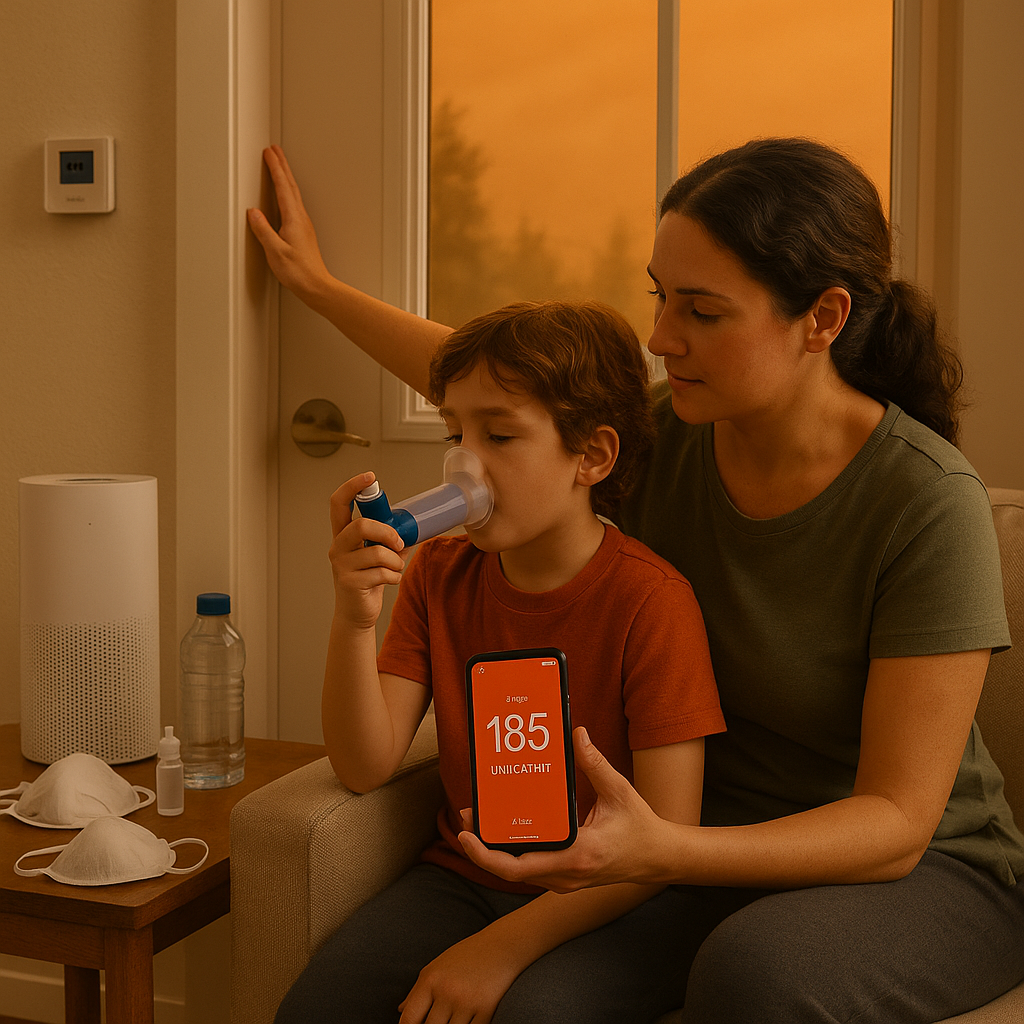
Staying Healthy During California Wildfire Season
Estimated read time: 7 minutes
TL;DR: Check the Air Quality Index (AQI), set up a “clean room” with a HEPA air purifier, upgrade home filters (MERV-13+), and avoid adding indoor pollution. Wear a well-fitting N95/KN95 if you must go outside. Sensitive groups (kids, older adults, pregnant, asthma/COPD/heart disease) should limit outdoor time when AQI >100; most people should stay indoors and use filtration when AQI >150. Use SendClinic telehealth for symptom guidance, inhaler refills, and action plans; use urgent/emergency care for red-flags.
Know your tools
- Air quality apps/maps: Check local AQI and smoke forecasts several times a day.
- AQI categories at a glance:
0–50 Good · 51–100 Moderate · 101–150 Unhealthy for Sensitive Groups · 151–200 Unhealthy · 201–300 Very Unhealthy · 301+ Hazardous.
Prep your home air (before smoke arrives)
- Pick a “clean room.” Close windows/doors; run a HEPA air cleaner sized for the room. Keep this space free of smoke-making activities (cooking, candles, vacuuming).
- HVAC settings: If you have central air, run the fan ON (not Auto) during smoke events and use the best filter your system allows (aim for MERV-13+ where compatible).
- DIY box-fan filters: Can help in a pinch; don’t leave them unattended.
- Car tips: When driving through smoke, set recirculate and keep windows closed.
What to do on smoky days
- Check AQI morning, midday, evening. Smoke shifts fast.
- Adjust activity by AQI:
- >100 (USG): Sensitive groups minimize outdoor time; move workouts indoors/low-exertion.
- >150 (Unhealthy): Most people stay indoors; use your clean room/HEPA.
- >200: Avoid outdoor activity; keep indoor air as clean as possible.
- Mask up if you must go out. Wear a well-fitting N95/KN95/P100 that seals well (not for children under 2).
- Avoid adding indoor pollution: Skip candles, incense, fireplaces; delay frying/broiling; avoid aerosol sprays; don’t vacuum unless your vacuum has HEPA.
- Eyes/throat care: Use lubricating eye drops and saline nasal rinses as needed; drink fluids.
Who’s most at risk (act early)
- Children, older adults, pregnant people
- Anyone with asthma, COPD, heart disease, or other lung/heart conditions
These groups should keep medications handy, follow action plans, and prioritize indoor clean air when AQI rises.
Symptom guide: telehealth vs. in-person
Great for telehealth (SendClinic)
- Cough, throat irritation, burning eyes, mild chest tightness
- Asthma/COPD tune-ups: action plan updates, inhaler/spacer technique, refills
- Deciding on activity limits for kids or athletes; work/school notes
Red flags → urgent care/ER
- Trouble breathing, chest pain/pressure, bluish lips/face
- Severe dizziness, confusion, fainting
- Worsening asthma despite reliever, or needing reliever again within minutes
- Oxygen saturation falling if you check at home
(If evacuation is ordered, follow immediately.)
Travel & evacuation readiness
- Sign up for local alerts and know your evacuation routes.
- Keep a Go Bag with: medications, copies of prescriptions, inhalers/spacers, chargers, masks (N95/KN95), eye drops, saline, water, snacks, key documents, and a list of allergies/conditions.
A simple smoke-day checklist
- Check AQI and forecast.
- Move to your clean room; run HEPA and HVAC fan ON.
- Switch workouts to indoors; reschedule outdoor events if AQI >150.
- If going out, wear a well-fitting N95/KN95; keep trips short.
- Hydrate; use saline rinses/eye drops if irritated.
- Check on neighbors who are older, pregnant, or have lung/heart disease.
- If symptoms escalate, book telehealth or seek urgent care per the red-flags list.
How SendClinic can help
- Same-day video visits for smoke-related symptoms
- Asthma/COPD action plans, inhaler technique checks, and refills
- Guidance on clean-room setup, masks, and family activity limits
- Follow-up if you’re not improving or need to escalate care
Start a Visit: Add your booking link here
See Pricing: Add your pricing page link here
Service Area/States: Add your link here
Educational content only. This article is not a substitute for professional medical advice. Always follow local emergency orders and your clinician’s guidance.
- Share
