
How Telehealth Can Help You Stick to New Year’s Health Goals
- Home
- How Telehealth Can Help You Stick to New Year’s Health Goals
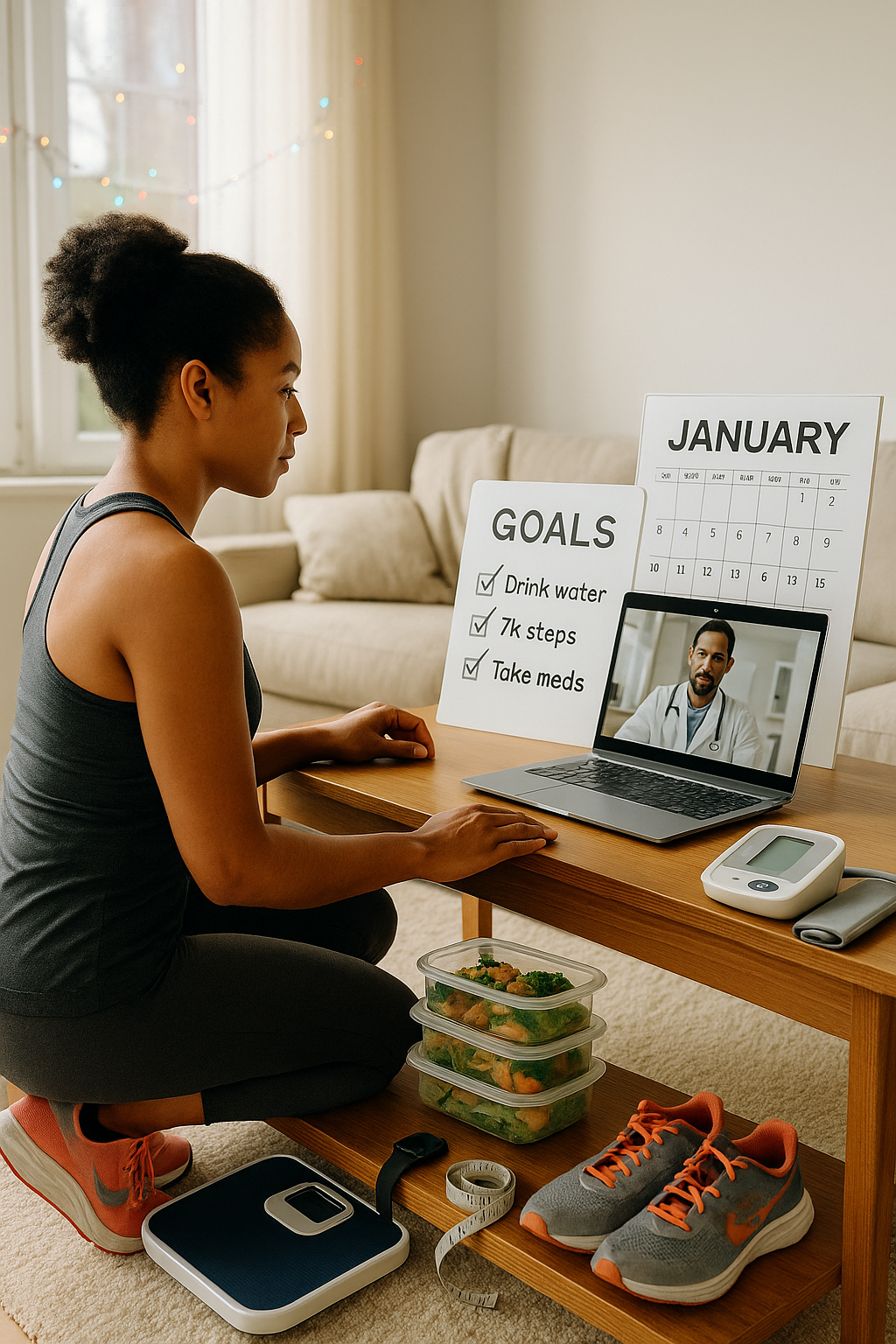
How Telehealth Can Help You Stick to New Year’s Health Goals
Estimated read time: 7–8 minutes
TL;DR: Most resolutions fail because they’re vague, lonely, and inconvenient. Telehealth fixes that with quick check-ins, personalized plans, and real-world data from your home devices. Pick 1–3 goals, turn them into tiny weekly actions, share your numbers, and adjust fast. Some care still happens in person, but telehealth makes everything else easier.
Why resolutions fade (and how online care solves it)
- Vague goals → We turn them into clear targets (“Walk 30 min, 5 days/week,” not “exercise more”).
- No feedback → You’ll share home readings (BP, weight, glucose, symptoms) and get timely tweaks.
- Inconvenience → 10–15 min video visits beat driving and waiting rooms.
- Willpower dips → Short follow-ups create accountability and help you course-correct.
Pick 1–3 goals you can actually keep
Here are safe, common choices—choose what matters most:
- Blood pressure control: average home BP under a goal you and your clinician set.
- Weight & nutrition: lose 5–10 lb safely, or hit a daily protein/vegetable target.
- Fitness: 150 minutes/week of moderate activity, or 8–10k steps/day.
- Sleep: 7–9 hours with a steady schedule; reduce late-night screens/caffeine.
- Stress & mood: one stress tool daily (walk, breathing, journaling); therapy or medication check-ins if needed.
- Quit smoking/vaping: set a quit date; use meds + coaching.
- Diabetes or cholesterol: reach an A1c or LDL goal with diet, meds, and movement.
Keep goals SMART: Specific, Measurable, Achievable, Relevant, Time-bound.
Turn each goal into a weekly, do-able plan
- Minimum Viable Action: What’s the smallest step you’ll do even on bad days?
- Example: “Walk 10 minutes after lunch daily.”
- If-Then Plan (implementation intention):
- “If it rains, then I’ll do a 15-min YouTube workout at home.”
- Habit Stack: Tie the new action to something you already do.
- “After I make coffee, I’ll take my morning BP.”
- Track 1–2 metrics: Steps, minutes, or servings. Keep it simple.
Weekly rhythm (repeat):
- Mon–Sat: Do the small daily action; log your numbers.
- Sun (10 min): Review the week with your telehealth plan: keep/raise/lower next week’s target.
What your telehealth clinician can do for you
- Create a personalized plan and safe targets based on your history, meds, and preferences.
- Teach the “right way” to measure (BP cuff technique, glucose timing, inhaler + spacer use).
- Adjust medications in small steps with short follow-ups (2–4 weeks) to improve results and reduce side effects.
- Order labs, imaging, vaccines, and home test kits and review results online.
- Coordinate referrals (dietitian, therapist, physical therapy, sleep clinic).
- Set up remote monitoring (optional) so data uploads automatically.
- Problem-solve barriers (travel, shift work, pain, caregiving).
A 12-week “stick-with-it” roadmap
Week 0 (Setup): Pick 1–3 goals. Gather devices (BP cuff, scale, glucometer/CGM, step tracker). Do baseline readings and any labs your clinician recommends.
Weeks 1–4 (Quick wins):
- Focus on one tiny change per goal.
- Share a 7-day BP log if blood pressure is a target.
- Adjust meds or timing if numbers or side effects need it.
Weeks 5–8 (Plateau busters):
- Add one notch: +5 minutes to walks; +1 vegetable serving/day; swap one salty meal.
- Troubleshoot: sleep, pain, stress, schedule.
Weeks 9–12 (Lock-in):
- Create a maintenance version of each habit (your bare-minimum routine).
- Plan for relapses: “If I miss two days, then I’ll restart with the 10-minute version.”
Simple home tools that make a big difference
- Upper-arm BP monitor (automatic, correct cuff size)
- Digital scale (same time each day)
- Glucometer/CGM if you manage diabetes
- Step counter or watch (or just your phone’s step app)
- Pill organizer and phone reminders
Goal-specific quick guides
Blood Pressure
- Morning & evening checks for 7 days; ignore day 1; average the rest.
- Sit 5 min, feet flat, arm at heart level.
- Share the log; adjust meds/lifestyle with your clinician.
Weight & Nutrition
- Keep a 10-word food log (what/when/portion) or take photos.
- Try “Protein + Produce first” at each meal; hydrate well.
- Aim for 7,000–10,000 steps/day or 150 min/week of movement.
Sleep
- Consistent bed/wake time (±30 min).
- Cut caffeine after noon; screens off 1 hour before bed; cool, dark room.
Stress & Mood
- 5 minutes/day of one tool (walk, breathing 4-7-8, gratitude note).
- Consider counseling and, if appropriate, medication with close follow-up.
Quit Smoking/Vaping
- Set a quit date within 2–4 weeks.
- Use medications (varenicline, bupropion, or NRT) + behavior plan.
- Remove triggers; practice “urge surfing” for 90 seconds.
Prepare for your telehealth visit
- Numbers: last week of BP/weight/steps; glucose if you track.
- Med list: names, doses, times (include supplements).
- Barriers: what usually knocks you off track (travel, stress, late work).
- Top 3 questions you want answered.
When to seek in-person or emergency care
- Chest pain/pressure, severe shortness of breath, blue/gray lips or face
- One-sided weakness, facial droop, trouble speaking, sudden severe headache
- Fainting, confusion, vision loss, heavy bleeding
- Blood pressure ≥180/120 with concerning symptoms (chest pain, breathlessness, severe headache, or vision changes)
How SendClinic can help
- Quick video visits to set goals you’ll keep
- Stepwise medication adjustments with clear written plans
- Orders for labs, vaccines, imaging, and home tests
- Follow-ups every few weeks so your plan evolves with you
Educational content only. This article isn’t a substitute for medical advice. Always follow your clinician’s guidance and local emergency instructions.
- Share
