
How to Prepare for Cold & Flu Season With Telehealth
- Home
- How to Prepare for Cold & Flu Season With Telehealth
How to Prepare for Cold & Flu Season With Telehealth
Estimated read time: 7 minutes
TL;DR: Telehealth helps you get fast, expert guidance without crowded waiting rooms. Get your flu shot (ideally September–October), build a home “sick kit,” know when a video visit is enough vs. when to go in-person, and start antivirals early if they’re recommended.
Why prepare now
- Flu vaccines work best when you get them before the season ramps up (ideally September–October, but it’s still useful later if flu is circulating).
- Telehealth cuts exposure and speeds decisions. A quick video visit can sort out “watch and treat at home” vs. “come in,” and—when appropriate—get you started on antivirals quickly.
Build your cold & flu telehealth sick kit
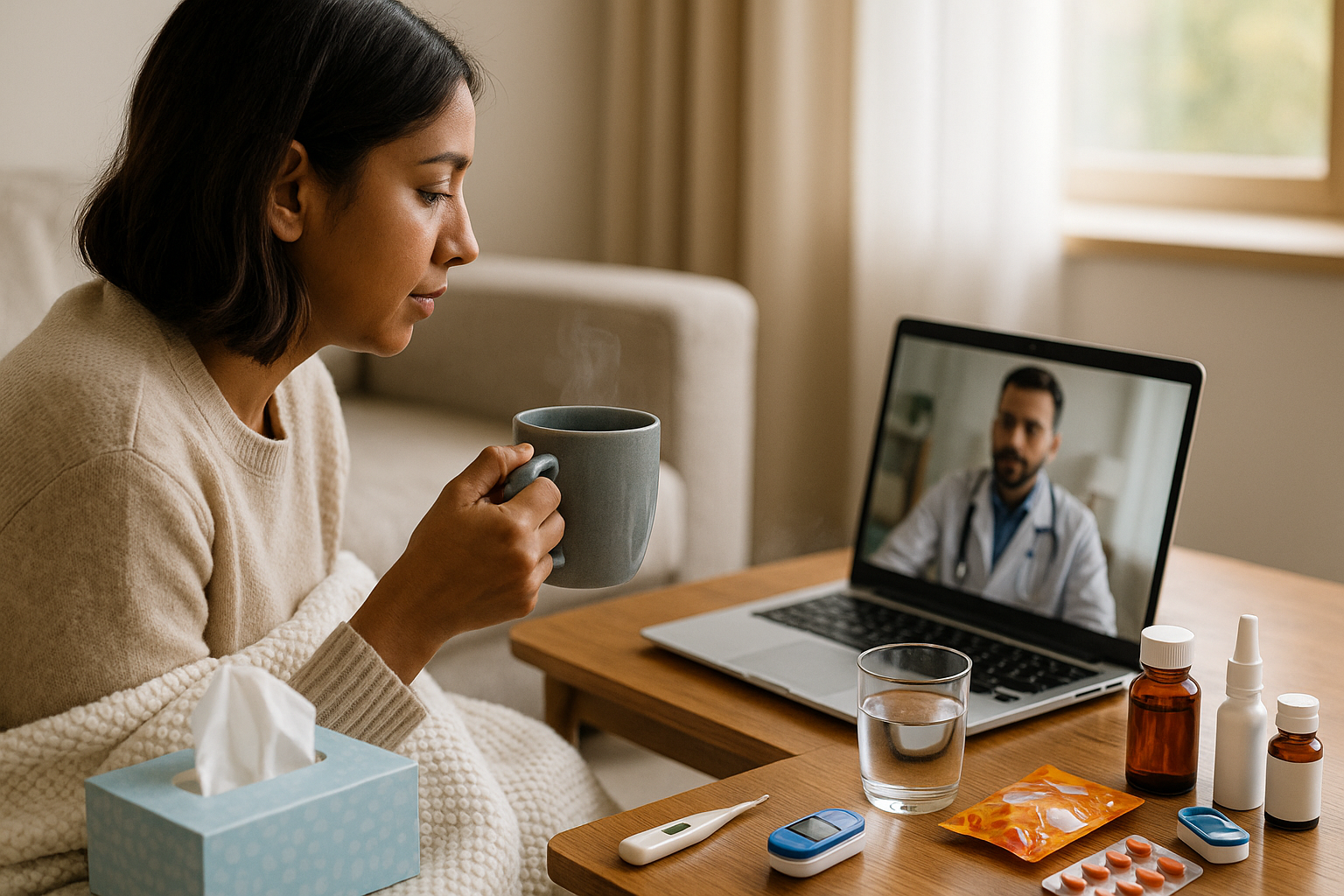
Have these ready so your clinician gets good info during a video visit:
- Digital thermometer (write down temps & timing).
- Pulse oximeter (optional, helpful for cough/shortness of breath).
- OTC symptom relievers (fever/pain reducers, saline spray, cough drops; honey for adults/older kids—never for children under 1).
- Humidifier, tissues, electrolyte drinks/broths for comfort & hydration.
- At-home tests for COVID-19 (and combo COVID-19/flu if available). Keep boxes handy so you can share brand/lot/date.
Pro tip: Store everything in one bin with a phone charger so you’re ready for a same-day video visit.
When telehealth is the right first step
- Flu-like symptoms: sudden fever, body aches, chills, dry cough, sore throat.
- Cold symptoms: stuffy/runny nose, mild sore throat—you want tailored home-care advice or a note for work/school.
- Medication questions/refills to keep chronic conditions stable during illness.
Cold vs. flu, in a nutshell: Flu usually hits faster and harder; colds are milder and more nose-dominant. There’s overlap—testing or clinical assessment may help.
Who should contact telehealth early
Higher-risk people should reach out as soon as symptoms start:
- Adults 65+, pregnant people.
- Young children (especially under 2).
- Anyone with chronic conditions (asthma, diabetes, heart/lung/kidney disease, immune compromise).
Early evaluation can speed treatment and reduce complications.
Your pre-visit checklist (save this)
- Vitals: Today’s highest temperature; oxygen level if you have a pulse oximeter.
- Timeline: When symptoms began; exposure to sick contacts.
- Symptoms: Fever, chills, cough, sore throat, body aches, runny/stuffy nose, headache, vomiting/diarrhea, shortness of breath.
- Home tests: COVID-19 and/or flu results + time taken.
- Med list & allergies: Include recent antibiotics/antivirals and any pregnancy status.
- Tech setup: Quiet, well-lit room; device charged; test packaging nearby.
Can a telehealth clinician prescribe flu antivirals?
Yes. After evaluating you, a licensed clinician can prescribe antivirals (like oseltamivir) when appropriate. Starting within 48 hours of symptom onset offers the most benefit, though later treatment can still help in some cases—especially if illness is severe or you’re high-risk. Don’t delay care while waiting for test results if you’re high-risk or very early in illness.
Stay-home guidance & protecting others
- If you’re sick: Stay home and away from others. Return to normal activities when symptoms are improving overall and you’ve been fever-free for 24 hours without fever-reducers.
- For a few more days after returning, use added precautions (mask indoors, cleaner air/ventilation, extra space) to lower any lingering risk of spread.
- Keep vaccines up to date, wash hands, cover coughs/sneezes, and consider a mask in crowded indoor spaces during peak season.
Red-flag symptoms that need in-person or ER care
Go to urgent care/ER or call emergency services for:
- Trouble breathing or chest pain.
- Blue/gray lips or face.
- Severe dehydration (very dizzy, not peeing, parched mouth), confusion, or seizures.
- Fever >104°F that won’t come down, or a fever in a baby under 12 weeks.
- Symptoms that were improving and then suddenly get worse.
How SendClinic Telehealth can help
- Same-day video visits for cold/flu assessment.
- Guided testing and, when appropriate, antiviral prescriptions.
- Personalized care plans & notes for work/school.
- Follow-up check-ins to make sure you’re improving—and quick escalation if you’re not.
Start a Visit: Add your booking link here
See Pricing: Add your pricing page link here
Learn about Virtual Urgent Care: Add your service page link here
FAQs
Do I need a positive flu test to get treatment?
Not always. If you’re high-risk or very early in illness, a clinician may start antivirals without waiting for lab confirmation.
Can I test for both COVID-19 and flu at home?
Yes—combo tests exist in some areas. Share your results and timing with your clinician during the visit.
When should I get a flu shot?
Ideally September–October, but vaccination is still helpful as long as flu is circulating in your community.
When is telehealth not enough?
If you have red-flag symptoms (trouble breathing, chest pain, confusion, severe dehydration, etc.), seek in-person or emergency care right away.
The bottom line
Telehealth makes it easy to prepare, get quick answers, and—when needed—start treatment fast. Stock your sick kit, get vaccinated, and know when to book a video visit vs. when to go in-person.
Educational content only. This article is not a substitute for professional medical advice. Always follow the guidance of your clinician and local public-health authorities.
- Share
