
Why Routine Health Checks Matter – Even Online
- Home
- Why Routine Health Checks Matter – Even Online
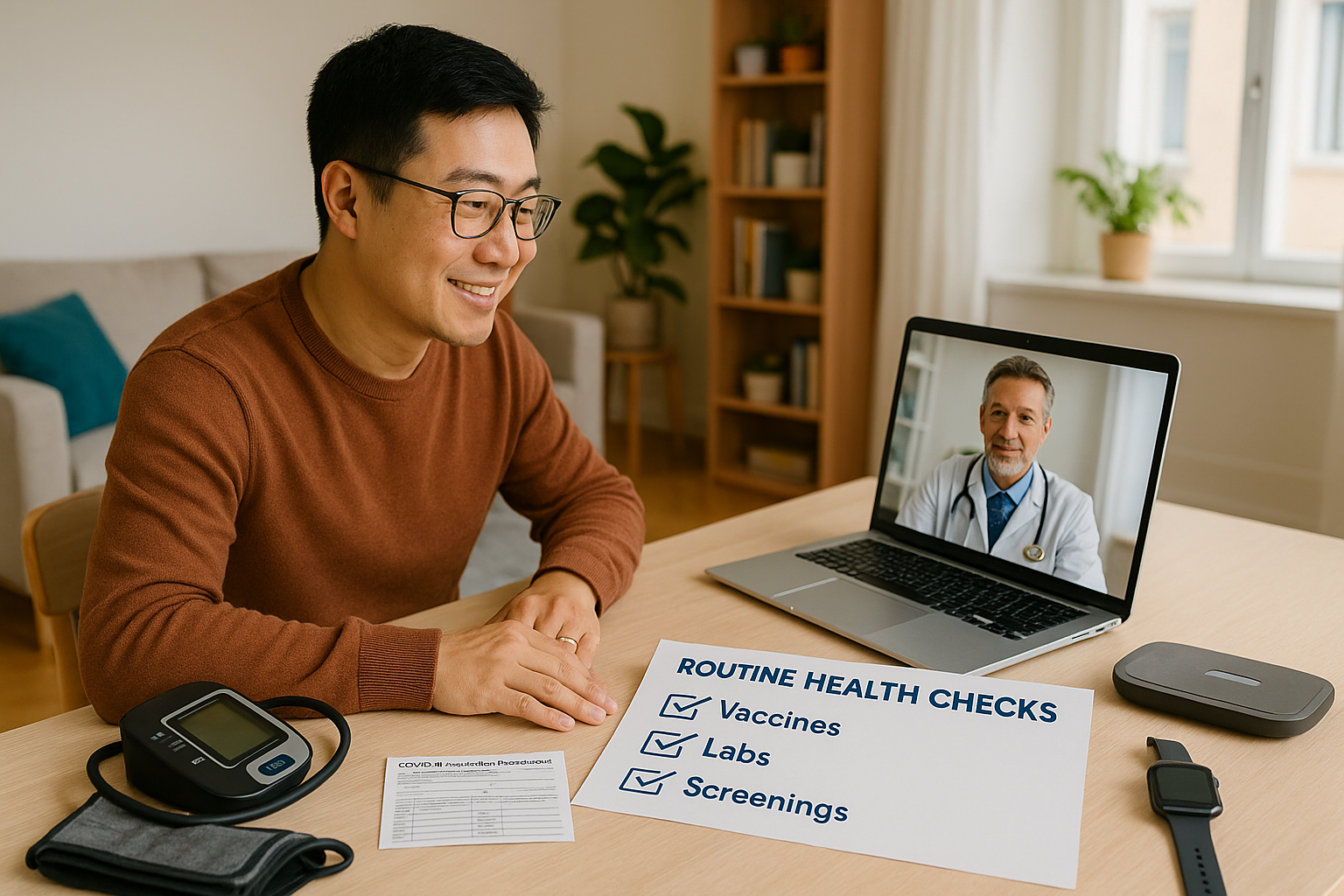
Why Routine Health Checks Matter – Even Online
Estimated read time: 7–8 minutes
TL;DR: Routine checkups catch problems early, keep your meds and vaccines up to date, and help you build healthy habits. Doing them online removes barriers—no commute, easier follow-ups, and your home readings (blood pressure, glucose, weight, symptoms) become part of the plan. Some screenings still require an in-person step, but telehealth makes everything else faster and simpler.
What counts as a “routine health check” online?
A focused yearly (or semiannual) visit that reviews:
- Your story: medical history, family history, medications/supplements, allergies
- Numbers: home blood pressure, weight, optional glucose readings, activity/sleep
- Risks & screening needs: what labs, vaccines, and imaging are due
- Goals: 1–3 realistic changes for the next month
- Follow-up plan: when to check in, which readings to message about sooner
Why these checks matter (even if you feel fine)
- Find issues early
High blood pressure, high cholesterol, diabetes, thyroid problems, mood concerns, and some cancers often start quietly. Early action = simpler treatment and fewer complications. - Keep meds optimized
Small tweaks—dose timing, side-effect swaps, combination therapy—can improve control and quality of life. - Build habits that stick
Brief follow-ups by video or chat provide coaching and accountability so changes actually happen. - Use real-world data
Home readings reflect your daily life better than one clinic snapshot and reduce the “white-coat” effect. - Save time and costs
Many steps happen from home: counseling, orders for labs/imaging, e-prescriptions, and results review.
What telehealth can handle from start to finish
- Lifestyle counseling: nutrition, weight management, activity, sleep, stress, migraine prevention
- Mental health screening & care: quick questionnaires, counseling, and medication management where appropriate
- Medication review & safety: deprescribing when possible, interaction checks, refill sync
- Blood pressure/chronic-disease tune-ups: technique checks, 7-day BP logs, dose adjustments
- Skin and allergy/asthma support: photo/video triage, inhaler/spacer technique, action plans
- Smoking/vaping cessation: medications plus habit strategies
What telehealth can start (with a local step)
- Vaccinations sent to a nearby pharmacy/clinic (flu, COVID-19, Tdap, shingles, pneumonia, RSV if eligible, hepatitis, HPV by age)
- Screening labs ordered to a local lab (A1c, lipid panel, thyroid, HIV, hepatitis C, STI panels, and more)
- Home test kits (where available): stool FIT for colorectal cancer, some STI kits
- Imaging/procedures referrals: mammogram, Pap/HPV test, colonoscopy, low-dose CT for lung cancer, bone density (DEXA)
A quick age-by-age rhythm (talk to your clinician about timing)
18–26
- Annual check-in; vaccines up to date; mental health screening; STI/HIV testing per risk; contraception or preconception counseling
27–39
- BP checks; lipid/A1c screening as needed; fertility or family planning; skin/sun care; sleep and stress plans
40–49
- Regular cardiometabolic screening; mammogram begins for many; colorectal screening often starts at 45
50–64
- Colorectal screening on schedule; shingles vaccine; lung-cancer screening if eligible; bone-health counseling
65+
- Focus on independence, memory, fall risk, hearing/vision; vaccines refreshed; bone density testing as advised
(Your plan may differ based on personal and family history.)
How to prepare for an online routine check
- Bring your numbers: last week of BP (two readings, morning/evening), weight, glucose if you track
- List every medication/supplement with doses and times
- Note vaccine dates and prior screenings (photos of your card/reports help)
- Write 2–3 goals or questions (e.g., “improve sleep,” “cut sodium,” “exercise with knee pain”)
- Have devices handy (BP cuff, inhalers, CGM) to confirm technique on camera
What happens afterward
- You’ll get a written plan with any orders (labs, imaging, vaccines, referrals)
- Set reminders for meds and habits; consider a pillbox or app
- Share results in the portal; your clinician updates the plan and schedules a short follow-up
- Keep a simple log (BP, steps, sleep, symptoms) to bring to the next visit
Myths vs. Facts
- Myth: “If I feel fine, I don’t need checkups.”
Fact: Many conditions are silent at first; prevention is cheaper and safer than rescue care. - Myth: “Online visits can’t do real prevention.”
Fact: Most planning, counseling, orders, and medication management are doable online; only the needle/imaging step must be in person. - Myth: “One office BP is enough.”
Fact: A home log gives a truer picture and guides safer decisions.
When a routine check should turn into urgent care
Seek same-day in-person care or call emergency services for any of the following:
- Chest pain/pressure, severe shortness of breath, blue/gray lips or face
- One-sided weakness, facial droop, trouble speaking, sudden severe headache
- Fainting, confusion, or severe dehydration
- Vision loss, heavy bleeding, or rapidly worsening symptoms
How SendClinic can help
- Annual or semiannual preventive video visits
- Orders for local labs, imaging, and pharmacy vaccines
- Medication and lifestyle tuning with quick follow-ups
- Referrals when an in-person step is needed
Educational content only. This article isn’t a substitute for medical advice. Always follow your clinician’s guidance and local emergency instructions.
- Share
