
How to Monitor Chronic Illnesses From Home
- Home
- How to Monitor Chronic Illnesses From Home
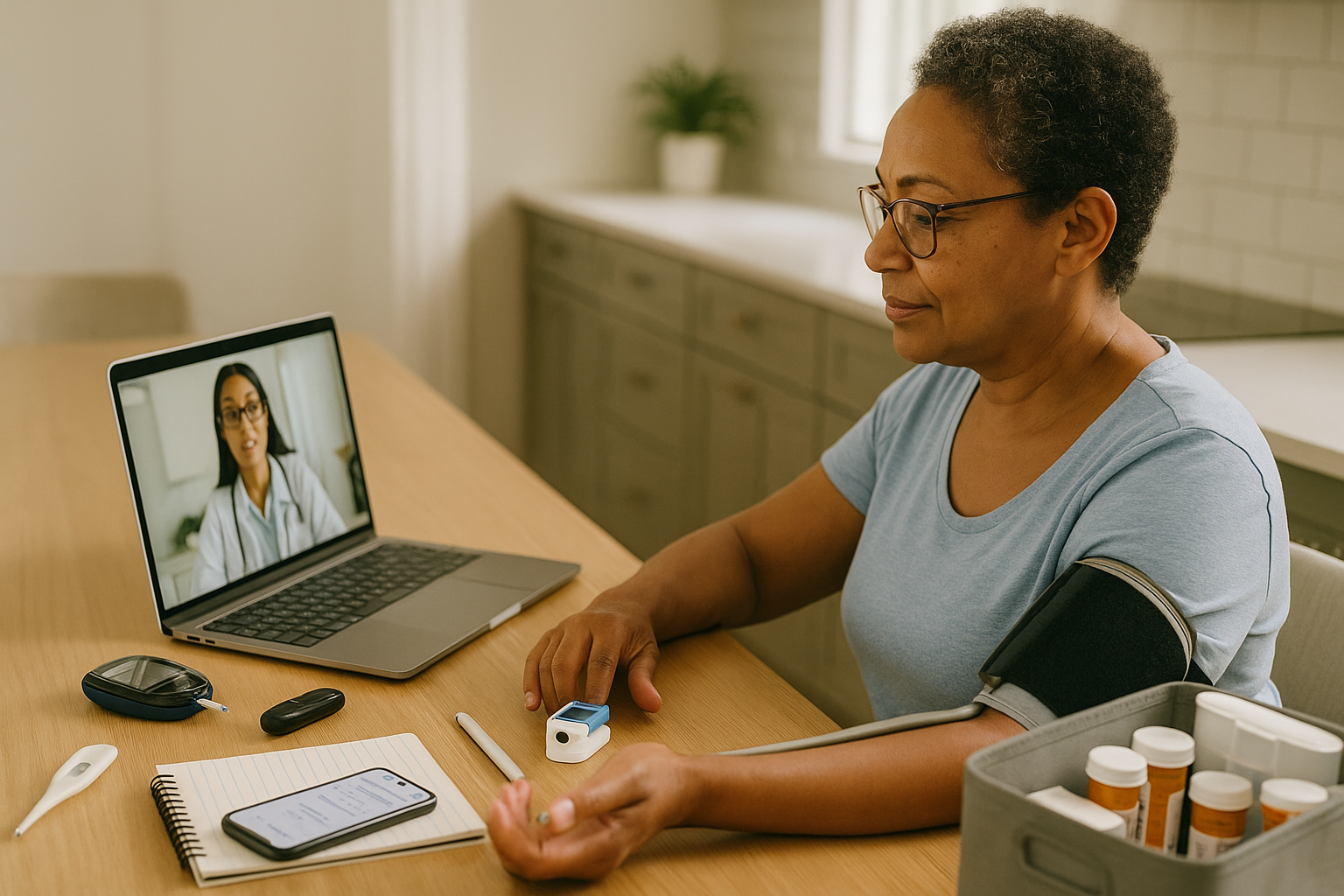
How to Monitor Chronic Illnesses From Home
Estimated read time: 7–8 minutes
TL;DR: Pick the right home tools, learn the correct way to measure, and follow a simple schedule (daily/weekly/monthly). Share your log during quick telehealth check-ins so your care plan gets updated in real time. Know the red-flag symptoms that mean you should get in-person or emergency care.
Why home monitoring matters
- Catches problems early so treatment changes can happen before you feel worse.
- Reduces “white coat” effect by using your normal environment and routines.
- Makes telehealth powerful: your clinician can adjust meds, order labs, and give coaching using your real numbers.
Build your Home Health Station
Keep these in one easy-to-grab spot (plus a phone charger):
- Blood pressure monitor (automatic, upper-arm, right cuff size)
- Digital thermometer
- Weight scale (ideally the same one daily)
- Pulse oximeter (helpful for lung or heart conditions)
- Diabetes supplies if needed (glucometer/CGM, strips, lancets, ketone strips if advised)
- Peak-flow meter if you have asthma (or a home spirometer if prescribed)
- Pill organizer and medication list with doses and times
- Notebook or app for logs (or a spreadsheet your clinician likes)
How to measure (the “Big Four”)
Blood pressure
- No caffeine, smoking, or exercise for 30 minutes; empty your bladder.
- Sit 5 minutes with back supported, feet flat, arm bare and supported at heart level.
- Take two readings 1 minute apart; record the second one (or average both).
- Use the same arm each time.
Body weight
- Weigh at the same time daily, after using the bathroom, before breakfast, in similar clothing.
Blood glucose (if you monitor)
- Follow your plan (fasting, before meals, 2 hours after meals, or continuous).
- Record values plus notes like “exercise,” “new med,” or “ate late.”
Oxygen level (if you monitor)
- Sit still; warm fingers help.
- Note both SpO₂ and pulse rate.
A simple schedule (print this)
Daily
- BP (morning, evening) if you’re adjusting meds; otherwise at least 3 days/week
- Weight (especially for heart failure)
- Glucose checks per your plan
- Symptoms: breathlessness, chest tightness, swelling, cough, dizziness, headaches
Weekly
- Review your log; note any trends
- Check inhaler and spacer technique if you have asthma/COPD (watch a quick video or ask your clinician to review on camera)
Monthly
- Refill meds and test strips early
- Clean devices; replace batteries
- Update your medication list
Every 3–6 months (or as advised)
- Telehealth tune-up to review numbers, side-effects, goals, labs, and vaccines
Condition-by-condition Quick Guides
High Blood Pressure (Hypertension)
- Aim for a 7-day home BP log before medication changes. Ignore day 1; average the rest.
- Take meds at the same time each day; don’t skip.
- Call same day if home BP is ≥180/120 after 1–2 minutes of quiet rest—even if you feel okay.
- Emergency if high BP comes with chest pain, shortness of breath, severe headache, weakness on one side, confusion, or vision loss.
Type 1 or Type 2 Diabetes
- Check glucose as directed (or confirm CGM is sharing).
- Keep a plan for lows: treat with 15 g fast carbs, recheck in 15 minutes, repeat if still low.
- Know your sick-day plan (how to adjust insulin/meds, when to check ketones, what to eat/drink).
- Foot check weekly: look for cuts/blisters/red areas; report problems promptly.
Asthma or COPD
- Track symptoms, reliever use, and—if you have a meter—peak flow (know your green/yellow/red zones).
- Review inhaler technique over video; use a spacer with MDIs if advised.
- Keep an Action Plan printed and on your phone.
- Red flags: struggling to speak full sentences, blue/gray lips, reliever not lasting → urgent care/ER.
Heart Failure
- Daily morning weights matter most.
- Call your clinician if you gain 2–3 lb overnight or 5 lb in a week, or if legs/abdomen swell, shoes feel tight, or breathing worsens when lying flat.
- Track sodium and fluid per your plan; keep diuretics instructions handy.
Chronic Kidney Disease / High Blood Pressure overlap
- BP log as above; share any dizziness or swelling.
- Know which meds to pause on sick days (ask about “SADMANS” or your clinic’s version).
- Keep up with lab monitoring to check potassium and kidney function.
A universal Sick-Day Plan (save this)
When you’re ill (fever, vomiting/diarrhea, can’t keep fluids down, or new shortness of breath):
- Hydrate: small frequent sips or oral rehydration solution.
- Keep taking essential meds unless your plan says otherwise. (Some blood pressure, diabetes, or kidney meds have special sick-day rules—clarify these in advance.)
- Check more often: BP, glucose, weight, SpO₂ as appropriate.
- Contact telehealth early if numbers drift from your normal or you can’t keep fluids/meds down.
- Emergency for chest pain, severe shortness of breath, confusion, blue lips/face, signs of stroke (face droop, arm weakness, speech trouble), or severe dehydration.
Getting the most from a telehealth visit
- Bring your numbers: a photo of your log or file from your device/app.
- Show the device on camera so the clinician can confirm fit and technique.
- Have your medication bottles nearby (name, dose, how you take it).
- Share context: stress, travel, sleep changes, new supplements, diet shifts.
- Agree on clear next steps: med changes, targets, when to follow up, and which readings should trigger a message.
Common roadblocks (and quick fixes)
- “My numbers bounce around.” Use the same routine, same time of day, and average readings.
- “I forget doses.” Use a pillbox + phone alarms; pair meds with a daily habit (teeth brushing, breakfast).
- “I’m not sure the device is right.” Ask your clinician for a validated model and correct cuff size; replace worn cuffs and batteries.
- “Diet changes feel overwhelming.” Tackle one swap at a time (e.g., replace one salty meal/day with a home-cooked option).
- “Exercise hurts.” Ask for a gradual plan or physical therapy referral; even short, frequent walks help.
When to seek in-person or emergency care
Go now (urgent care/ER or call emergency services) for any of the following:
- Chest pain/pressure, severe shortness of breath, blue/gray lips, fainting
- One-sided weakness, facial droop, trouble speaking, sudden severe headache
- Blood sugar very low and not improving after treatment, or very high with vomiting or confusion
- Oxygen level staying low at home despite rest (if you monitor SpO₂)
- Fever in a very young infant (under 3 months)
How SendClinic can help
- Same-day video visits to fine-tune your plan using your real-world numbers
- Medication adjustments and refills with clear, written instructions
- Device coaching (BP cuff, glucometer/CGM, inhalers, peak-flow)
- Follow-ups that keep you accountable and on track
Educational content only. This article is not a substitute for medical advice. Always follow your clinician’s guidance and local emergency instructions.
- Share
