
What to Do When You Get Sick on Holiday Weekends
- Home
- What to Do When You Get Sick on Holiday Weekends
What to Do When You Get Sick on Holiday Weekends
Estimated read time: 7 minutes
TL;DR: Start with telehealth for most common issues (cold/flu, COVID, sinus/ear pain, UTIs, rashes, medication questions). Use urgent care for things that can’t wait but aren’t life-threatening (stitches, X-ray). Go to the ER for red-flag symptoms (trouble breathing, chest pain, severe dehydration, confusion, stroke signs). Keep a small “weekend sick kit,” use at-home tests, and know how to transfer prescriptions if your usual pharmacy is closed.
Why holiday weekends are tricky
- Many primary-care offices and some pharmacies have limited hours.
- You might be traveling and away from your regular clinic.
- Certain treatments work best early (e.g., flu antivirals within ~48 hours of symptoms).
- Quick guidance helps you avoid unnecessary ER visits and start the right care fast.
Quick guide: Telehealth vs. Urgent Care vs. ER
Telehealth first (great for):
- Cold/flu/COVID symptoms, sore throat, sinus and ear pain
- Pink eye, rashes, insect bites, mild allergic reactions
- UTIs, medication refills, motion-sickness help
- “Is this normal?” questions and home-care plans
- Work/school notes and travel letters
Go to urgent care when you need:
- Stitches, simple sprains/possible minor fractures
- Simple dehydration needing oral rehydration support
- Ear irrigation, wound care, uncomplicated X-rays
Go to the ER or call emergency services for:
- Trouble breathing, chest pain/pressure, severe shortness of breath
- Face drooping, arm weakness, speech difficulty (possible stroke)
- Severe dehydration (very dizzy, minimal urination), confusion
- Blue/gray lips or face, severe allergic reaction (anaphylaxis)
- High fever that won’t come down or any fever in an infant <3 months
- Significant head injury, severe abdominal pain, heavy bleeding
Your step-by-step if you get sick right now
- Check vitals: temp; heart rate if you know it.
- Test at home: use a COVID test (and flu test if you have one).
- Book a telehealth visit: describe onset (first day/time), exposures, meds taken, test results.
- Start supportive care: fluids, rest, pain/fever reliever as directed; saline spray/rinses; humidifier.
- Ask about treatment timing: some meds (e.g., flu antivirals) are most helpful early.
- Confirm pharmacy options: which locations are open; how to transfer a prescription if traveling.
- Re-check symptoms every 4–6 hours; follow up if worse or new red flags appear.
- Isolate or mask if sick with a respiratory illness, especially around high-risk people.
- Document what you took and when; keep notes for your clinician.
- Escalate to urgent care/ER if red-flag symptoms develop (see list above).
Symptom snapshots (what telehealth can help decide)
Fever + body aches + cough/sore throat
- Likely viral (flu/COVID/another cold virus). Telehealth can advise testing, start treatment if appropriate, and outline return-to-activities.
Sore throat
- A clinician can screen for strep vs. viral and guide testing or empiric care.
Sinus pressure, congestion, ear pain
- Get technique tips for nasal sprays/rinses; discuss when antibiotics may or may not help; identify when ear symptoms need in-person look.
UTI symptoms
- Burning/urgency/frequent urination? Telehealth can assess, order urine tests if needed, and e-prescribe when appropriate.
Stomach bug
- Hydration plan (how much/what type), safe meds, and signs you need IV fluids.
Rash or pink eye
- Video helps triage likely causes and prescribe drops/creams when indicated.
Meds & pharmacies on long weekends
- Know your open pharmacy. Search “pharmacy near me open now.” Many chains list holiday hours.
- Transfer a prescription (quick script): “Hi, I’d like to transfer my prescription from [Old Pharmacy, City] to your store. My name is [Full Name, DOB]. The medication is [Name/Strength]. The old pharmacy’s phone is [Number].”
- Traveling across state lines? Clinicians must generally be licensed in the state where you are physically located at the time of your telehealth visit. Check availability on your booking page.
- All-in-one cold meds can duplicate ingredients—ask your clinician or pharmacist to avoid double dosing.
- Early windows matter: antivirals for flu are most beneficial if started ASAP after symptoms begin.
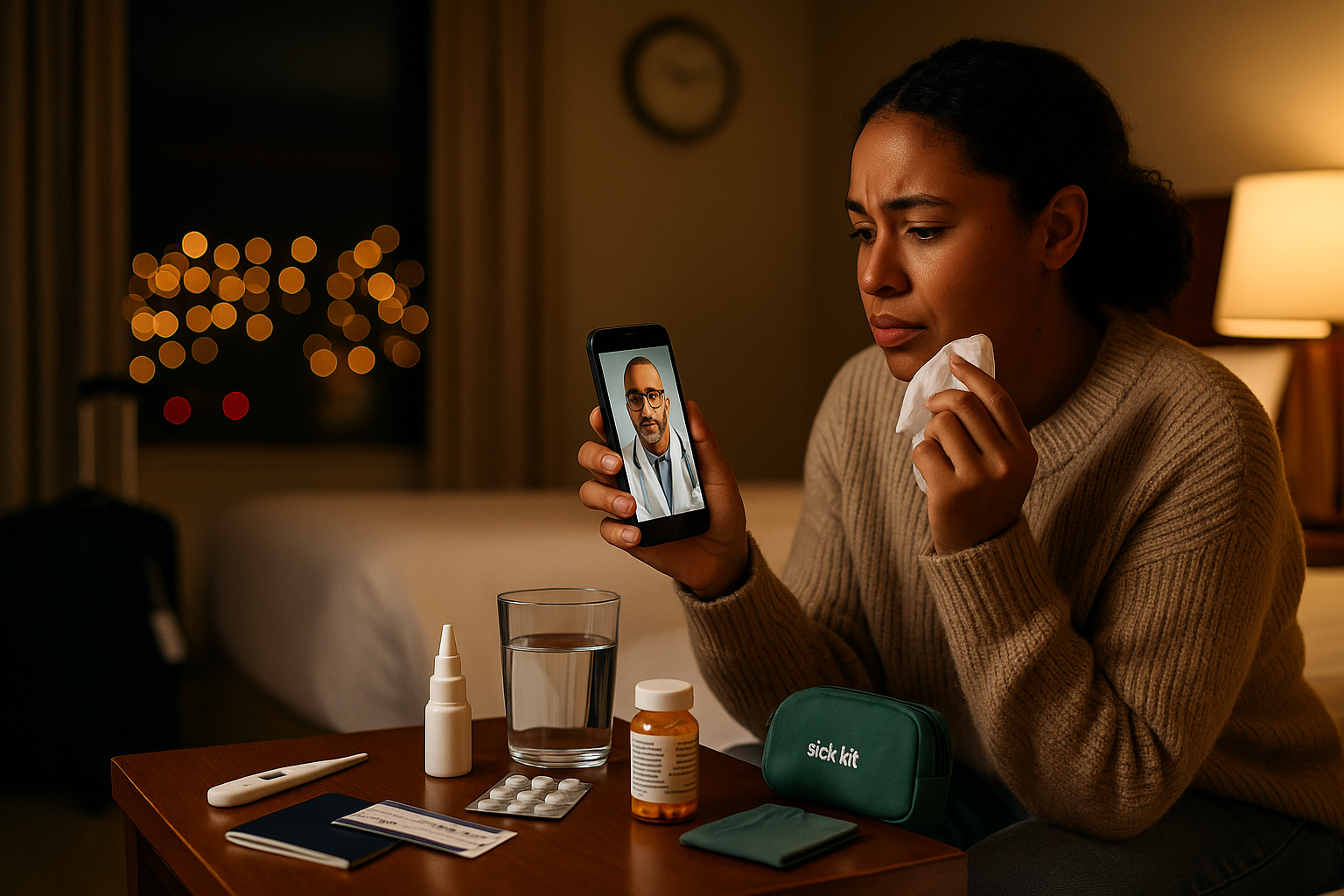
Build a tiny “weekend sick kit” (carry-on friendly)
- Digital thermometer
- Basic pain/fever reliever
- Saline spray + throat lozenges
- Antihistamine (non-drowsy by day; sedating only at night if advised)
- Small pack of tissues, hand sanitizer, masks
- 2–3 electrolyte packets
- A few home tests (COVID; add combo tests if you use them)
- List of meds/allergies and your pharmacy insurance card
Kids & older adults: special notes
- Kids: dosing is weight-based—use the correct syringe/cup; avoid honey in children <1 year; avoid multi-symptom combos unless a clinician okays the ingredients.
- Older adults & pregnant patients: lower thresholds for in-person care; ask about interactions before adding OTC meds.
Your telehealth visit: how to get the most from it
- Have this info ready: symptom timeline, recent exposures/travel, home test results and times, medication list (including supplements), allergies, pregnancy status, chronic conditions.
- Good video setup: quiet, bright space; camera at eye level; device charged.
- Follow-up plan: clarify when to check back and what signs mean “go in now.”
How SendClinic can help on holiday weekends
- Same-day video visits (even when clinics are closed)
- Clear treatment plans and dosing tailored to you
- E-prescriptions sent to an open pharmacy nearby
- Work/school notes and return-to-activity guidance
- Follow-up if you’re not improving or need to escalate
Start a Visit: Add your booking link here
See Pricing: Add your pricing page link here
Check Availability by State: Add your service area link here
FAQs
Should I wait it out or book a visit?
If you feel significantly unwell, have risk factors, or need guidance on testing/meds, don’t wait—a quick telehealth visit can save time and prevent complications.
Do I need antibiotics for colored mucus?
Not necessarily. Color alone doesn’t prove bacterial infection. Duration, fever, facial/tooth pain, and “got better then worse” patterns matter—telehealth can help assess.
I’m traveling—can you still see me?
Usually yes if we’re licensed where you are right now. Check our service area at booking.
My regular pharmacy is closed. Now what?
Ask us to send your prescription to an open location or use the transfer script above.
SEO Goodies (customize for sendclinic.com)
- Meta title (≤60 chars): Sick on a Holiday Weekend? Do This | SendClinic
- Meta description (≤155 chars): Sick over a long weekend? Learn when to use telehealth vs. urgent care vs. ER, how to get meds fast, and what to keep in your sick kit.
- Suggested slug:
/blog/sick-on-holiday-weekend-what-to-do - Primary keywords: sick on holiday weekend, urgent care vs ER, telehealth weekend, flu antivirals window, pharmacy open near me, holiday weekend illness, virtual urgent care
- Internal link ideas: Start a Visit, Pricing, Service Area/States, Privacy & Security, Virtual Urgent Care
- Alt text ideas: “Person on a telehealth call holding tissues while checking temperature,” “Weekend sick kit items on a nightstand.”
Educational content only. This article is not a substitute for professional medical advice. Always follow the guidance of your clinician and local emergency services.
- Share
